White label VPN, reseller or your own code: who owns the customers
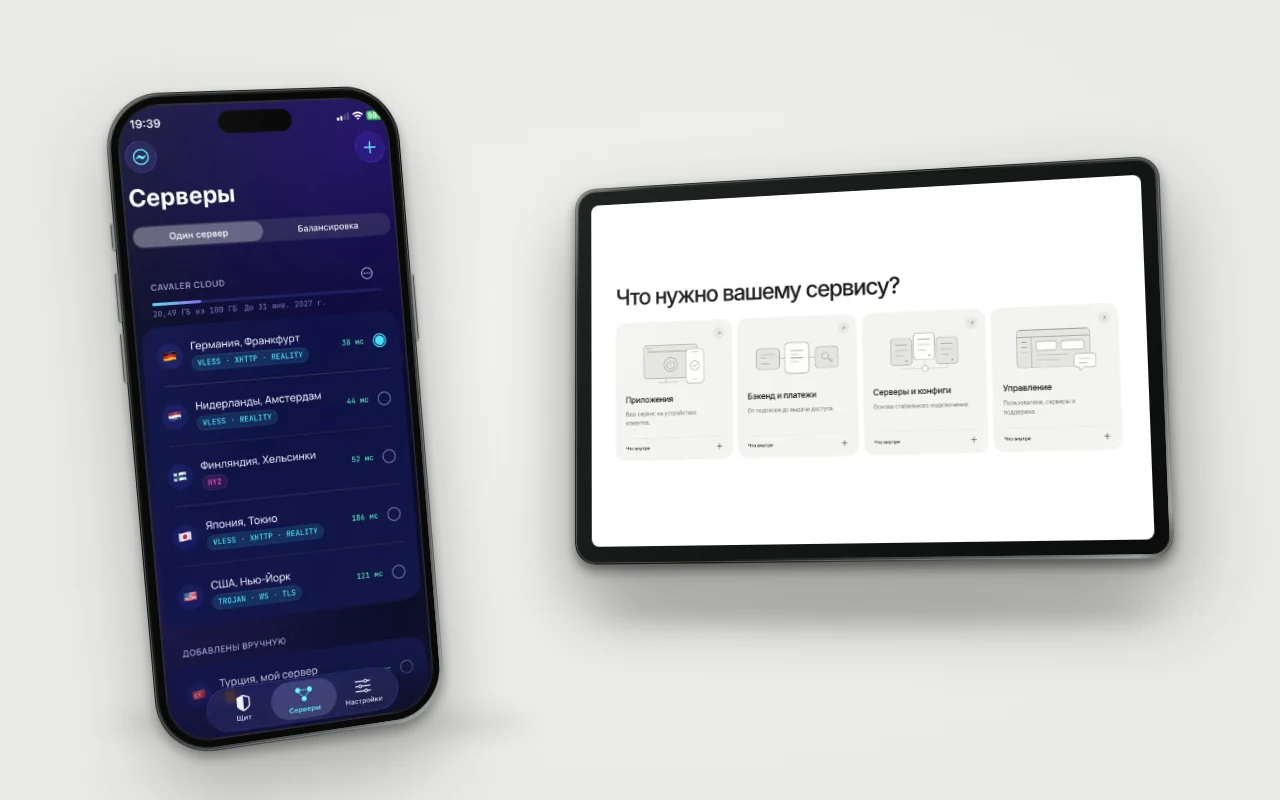
There are three ways to put a VPN app with your name on it in front of users. You can resell a provider's service, take a white label app on a provider's network, or own the code and run your own servers. Vendors who sell the first two publish plenty of "how to start a VPN business" guides. We aren't neutral either: we build and sell VPN client apps with source code. So here is the comparison with our bias stated, built around the question vendor guides skip: what you keep if you leave.
Short answer
White label is the cheapest way to test whether you can sell VPN. You don't run servers or go through app review, and you pay per active user. Reselling is lighter still and gives you the least control. Owning the code costs the most up front and is the only option where prices, servers and the customer list are fully yours. If you start on white label and later move, the cost of the move depends on what the contract lets you take.
| Reseller | White label | Own code | |
|---|---|---|---|
| Brand in the app | provider's, sometimes co-branded | yours | yours |
| Apps and store accounts | provider's | provider builds; whose store account varies | yours |
| Servers | provider | provider | you |
| Your cost | wholesale price | per active user, monthly | servers, bandwidth, development |
| Pricing control | limited by wholesale price | limited by per-user rate | full |
| Leaving | customers stay with provider | depends on contract | nothing to leave |
Reselling: someone else's product, your sales channel
Reseller programs let you sell a provider's VPN, usually as codes, accounts or an API that creates them. PureVPN runs three tracks (distributor, private label and API) without publishing commission rates. Windscribe runs a reseller program next to its white label offer.
It's quick and almost free to start. The trade-off is plain: the user knows the product by the provider's name, and the provider can change the wholesale price or the product itself. You control the audience you bring, nothing more.
White label: your brand on someone else's network
White label is where most "start a VPN business" content points. The provider gives you branded apps for the main platforms, an admin console, often an SDK and billing API. You bring the brand and the customers.
Pricing is per active user per month. Windscribe says it doesn't require an annual contract and gives a ROI calculator where you enter your retail price. PureVPN describes pricing per active subscriber. Neither publishes the per-user rate on its page; you get a proposal after a call.
Two things to read in the contract before you sign:
- Whose App Store and Google Play account the apps are published under. VPN apps on the App Store may only be offered by organizations (Guideline 5.4). If the app sits on the provider's account, its reviews and installs stay there when you leave, unless the contract says the app will be transferred to you.
- Whether you can export your users and what happens to their active subscriptions. The provider issues the accounts and runs the servers, so without that clause your customer list is a list of emails.
Own code: your app, your servers
Owning the code means your own apps and your own servers, usually WireGuard or Xray with a panel and a bot or web billing. It costs more before the first sale: development or a purchased codebase, a store account as an organization, app review, servers.
What you get is the freedom to change one piece without touching the rest. Move to another host, or raise prices for new users only and leave existing ones alone. Because modern clients read standard subscription links, replacing the app means users install a new one and keep the same link.
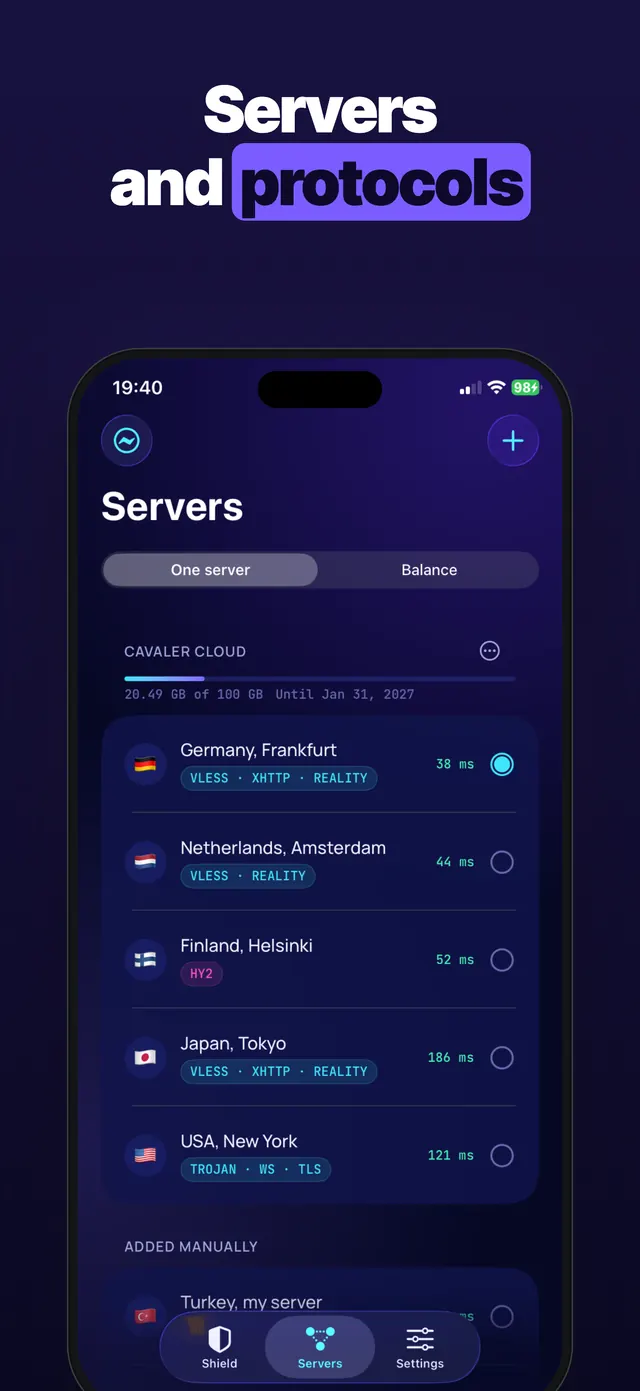
Buying a ready codebase is the middle path. It's faster than development, but you inherit everything inside it. In VPN apps built on Xray-core that includes the licences of the core's dependencies: a default build links GPL-3.0 modules from sagernet/sing into the binary. We wrote a full due diligence checklist for buying a VPN app.
How to decide
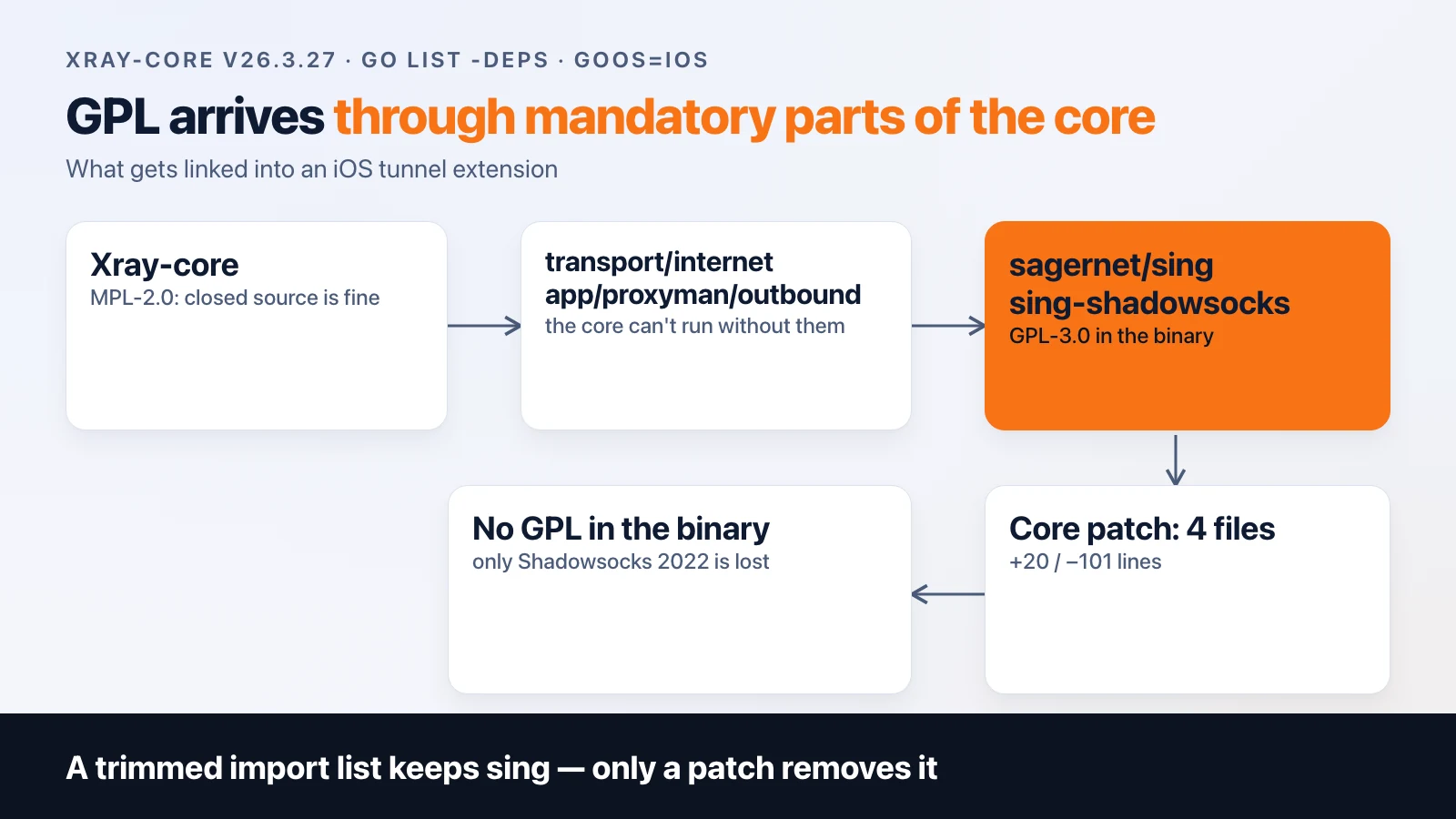
Start with whether you can sell VPN at all. If you haven't proven that yet, white label or reselling is the cheapest way to find out, as long as the contract protects the exit: user export, the store account, notice on price changes.
If losing users on a switch is unacceptable, start on infrastructure you own, or at least with the app on your own store account.
And someone has to fix it at 2 a.m. Own code that nobody on your side can read is a black box on your servers, so budget for that person from day one.
If you're weighing owning the code, our VPN business page breaks the launch into modules with a calculator, and lists the VPN apps we sell with source.
Frequently asked
What is the difference between a VPN reseller and white label VPN?
A reseller sells the provider's product, often with codes or accounts, under the provider's brand or lightly rebranded. White label gives you apps under your own name on the provider's network. In both, the provider runs the servers and sets your wholesale price.
How is white label VPN priced?
The large providers we looked at in November 2026 charge per active user per month. Windscribe says no annual contract; PureVPN says pricing is per active subscriber. Neither publishes the rate: you request a quote.
Who owns the customers under white label?
Usually you own the brand and the billing relationship, the provider owns the network and the accounts it issues. Whether you can take users with you when you leave depends on the contract, so ask before launch.
Is owning the code worth it for a VPN app?
When you have a few hundred paying users and want to set prices, change servers or switch providers without losing them. Before that, white label is the cheaper way to find out whether you can sell VPN at all.
Related articles
Buying a VPN app: a due diligence checklist before you pay
What sits behind a VPN app listing: where the revenue comes from, who runs the servers, GPL inside Xray-core, App Store transfer rules and building it yourself.
Your Own App or Happ: What to Give VPN Service Customers
Happ is free and installs in a minute, but it keeps getting pulled from the Russian App Store. Your own app can take months to pass review. What to give subscribers, and when.
Xray-core in an iOS app: GPL in the binary, 14 core patches and memory
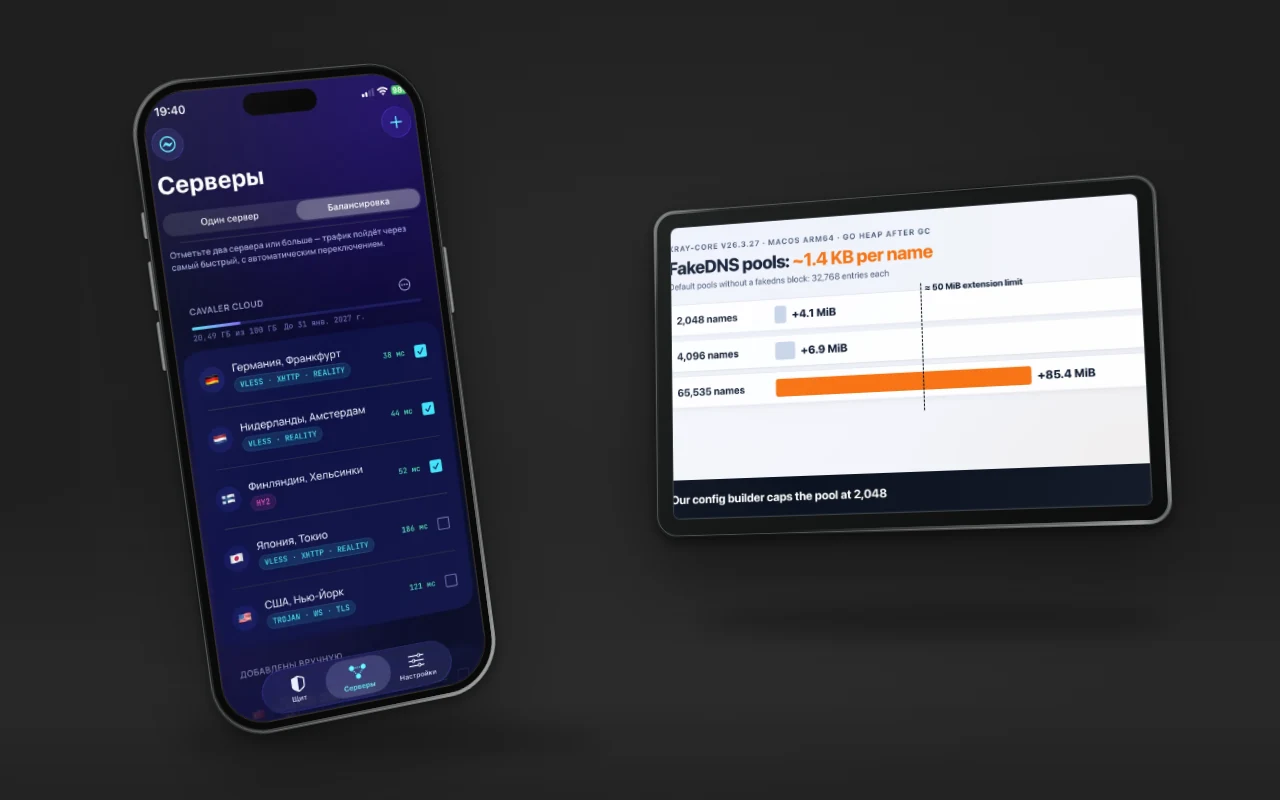
How Xray-core lives inside an iOS Network Extension: GPL modules in the binary, crashes on core restart, and memory used by geo files, FakeDNS and DNS flows.