MeerGuard: how we turned a VPN tool for friends into a service with 9000+ users

MeerGuard is a subscription-based VPN service: a Telegram bot, a Mini App, a website, and an iOS app running on our own infrastructure. Today it has 9,000+ users, 7,000+ successful payments, and it broke even in its third month. This is the story of how a product grew from a "help out some friends" tool into a real business.
Starting point: a client project
In early 2023, a client came to me with a task: build an iOS VPN app. I'd already written in SwiftUI, but I had never worked with VPN protocols at a low level. I agreed and started digging in.
We picked the following stack: Xray-core as the engine, VLESS as the protocol. By that point, VLESS had already become the standard in the user community. It masks traffic as regular HTTPS, and filtering systems have a hard time detecting it. Alternatives like OpenVPN or WireGuard were already performing poorly in Russia at the time.
Within a month, I'd figured out NetworkExtension on iOS and written a PacketTunnelProvider, and I understood how Xray integrates into iOS through C bindings. In parallel, I got to grips with the server side: how a server with Xray comes up, how keys are generated, how configs are handed out. By the end of the project, I knew the stack inside out.
The hypothesis: "I'll help out some friends"
After delivering the client's app, I set up my own server with Xray and started handing out configs to friends. Just as a favor. They needed a stable VPN, and I had the infrastructure. I didn't charge.
A couple of months later, I realized two things. It takes time: someone lost their config, someone else needs a new key, someone's device changed. And demand was bigger than I thought: friends started recommending me to their friends. I couldn't keep up doing it by hand.
The question became what to do about it. Logically, there were two paths.
- Build an iOS app and publish it. Slow (App Store review plus finishing touches), expensive (you need design, a landing page, marketing), and I still wouldn't know whether people were willing to pay.
- Build a Telegram bot that hands out keys on its own. Fast (two weeks), cheap (just my time), and demand could be validated within a month.
I chose the second. Probably the most important decision in the entire history of the project.
The Telegram bot as validation
The bot's logic was simple.
- The user starts the bot.
- The bot offers three plans: 1 week free, one month for 190₽, three months for 495₽.
- The user picks one and pays.
- The bot generates a key and sends it to the chat.
- The user pastes the key into any Xray client (V2RayTun, Streisand, etc.) and connects.
No account area, no Mini App, no iOS app. A bot, a key, and off you go.
After the first week, it was clear the hypothesis held. People were paying for a minimal product that had nothing going for it except the fact that it worked.
Then word of mouth kicked in. Not from targeting, not from ads. People just told each other. That was the signal to invest further.
Partner and team
At that point, I realized I couldn't carry a product on my own. I could write a bot, but I didn't know VPN server infrastructure at an expert level. And I couldn't simultaneously run client projects and develop my own product 10 hours a day.
I brought in a partner, a friend who's stronger than me in DevOps and servers. The division of labor worked out like this. Me: the bot, the backend, payments, talking to users. My partner: the VPN server infrastructure, Xray configuration, monitoring servers in different countries.
Later, two more specialists joined us. A backend developer helped scale payments and the admin panel. A full-stack developer built the iOS app, the Android client, the web account area, and the Mac app.
Four payment providers
Payments are the biggest technical headache for a VPN service in Russia. Russian payment processors view VPN services with suspicion. Not everyone has foreign cards. Not everyone has crypto either.
We integrated four providers at once.
| Provider | Why |
|---|---|
| YooKassa | Russian cards, the bulk of our users |
| CryptoBot | USDT, BTC, ETH for those who use crypto on principle or don't have cards |
| Telegram Stars | Micro-payments through Telegram, especially for renewals |
| Tribute | Foreign cards, a workaround for the subscription model |
Architecturally, it's an abstract payment interface in the bot. The user picks a plan, the bot offers every available method, and then different pipelines run underneath. For the user, it's one experience, with no need to understand what's happening behind the scenes.
Website and iOS: responding to the Telegram block
Then something happened we hadn't planned for. Telegram was blocked in Russia. Not completely, but some users physically couldn't open it without a VPN. And they wanted to buy that VPN from us. A vicious circle.
It became clear the bot couldn't remain the only entry point. If someone needs a VPN to get into the bot to buy a VPN, we lose half our audience.
We built two channels that don't depend on Telegram.
The website. Email login, the same account area with plans and servers. Card purchases through YooKassa. Key delivery in the account area.
The iOS app. A native VPN client with auto-connect. For users who find copying a key into a third-party app inconvenient or confusing.
This wasn't "expanding the product for the sake of looking good" — it was a response to a real accessibility problem. If Telegram hadn't been blocked, we might have stayed on the bot longer.
Mini App as a Convenience
We built the Telegram Mini App later, once the service had more than 6000 users. It wasn't a story about expanding into new channels — it was about convenience. Some users didn't want to go into the bot chat, pick commands, and scroll through long messages. They wanted a familiar app screen with buttons.
The Mini App gave them that screen right inside Telegram. Plans, servers, the key, subscription history — all in one window. No separate install.
The result was an ecosystem. One backend, four interfaces.
| Interface | Who it's for |
|---|---|
| Telegram bot | Those used to working in chat |
| Mini App | Those who want a familiar app screen |
| Website | Those without Telegram, or on desktop |
| iOS app | Those who want auto-connect and a native client |
If every front end carried its own subscription and payment logic, we'd have died trying to keep it all in sync. In our setup, the bot, Mini App, website, and iOS all talk to a single API. A new feature goes in one place and shows up in every channel.
Admin Panel Inside the Bot
In parallel, we built an admin panel right inside the Telegram bot. The admin has an /admin command that opens a separate menu.
Here's what's in it.
- User management (ban, renew, cancel subscription)
- Mass broadcasts (with HTML markup, with media)
- Promo codes, generated one at a time or in batches
- Refund processing (via the YooKassa webhook and a link to the database)
- Payment analytics by provider, by plan, by time period
- Server management through integration with the Remnawave panel
Why an admin panel inside the bot instead of a separate web dashboard? Both my partner and I always have Telegram open. Building a separate admin site would have meant another login, another tab, another place for bugs. Inside the bot, the admin panel works from any device, including a phone. It's not "correct from a patterns standpoint," but it works.
Referral Program
We launched a two-sided referral program. Both the person who refers and the person who's referred get a bonus.
The logic is simple. If someone likes the service, they'll tell a friend. If telling gets them nothing, they'll tell them occasionally. If it gets them a free month and their friend a discount, they'll tell them often.
The referral program became a big part of organic customer acquisition. The second big part is YouTube.
YouTube as the Main Channel
We tried buying paid ads. The payback was slow and unstable. By our estimates, acquiring one customer through paid ads cost roughly the same as one monthly subscription. We only got into the black on repeat renewals.
Video works differently. A single YouTube video is a one-time investment in production (script, shooting, editing, thumbnail, SEO). After that, it brings in customers for months, then years, as long as it stays relevant in YouTube search.
Some of our videos are about VPN as a technology, some review specific countries, some cover tips and tricks. Each one addresses its own search query. They're all useful on their own, and MeerGuard comes up at the end as one possible solution.
I'm now applying the same approach to building a portfolio site through a blog and articles targeting SEO queries.
The Numbers Today
- 9000+ users in the first 10 months
- 7000+ payments in the first 10 months, including trial payments at 1 ₽
- Servers in 8 countries: Russia, Germany, the Netherlands, the US, Turkey, Singapore, Japan, Finland
- 4 client interfaces (bot, Mini App, website, iOS)
- 4 payment providers
- Profitable from the 3rd month of operation, including infrastructure costs
- Subscriptions: 190₽/month, 495₽/3 months
- 1185 users came through referral links
What I'd Do Differently
I'd have launched the referral program earlier. We didn't add it right after launching the bot. Had we done it from the start, growth would have been faster.
I'd have launched the website and iOS earlier. We moved into those channels as a response to a block, not as part of the product plan. Had we built them in from the start, we wouldn't have had to play catch-up.
I'd have started the YouTube channel earlier. We tried different channels, and YouTube turned out to be the best. We didn't start making videos consistently until after the first year. Had we invested earlier, organic traffic would be bigger.
Less time on the iOS app at the start. When we first sat down to build iOS, I thought, "this is the final product, it has to have everything." It came out overcomplicated. Now I understand: in our case, iOS is a convenient user interface, and it doesn't need enterprise-grade features.
What to Take Away
If you're thinking about building your own product:
- Start with a minimal interface. A Telegram bot, a Notion form, a chatbot — anything that doesn't take months of development. That's demand validation.
- Don't build one big product. Build one backend and several front ends. That gives you adaptability to outside circumstances. In our case, for example, the front ends appeared in response to Telegram being blocked, not as part of the original plan.
- Payments are a pain of their own — budget a month of work for them. You can't predict in advance which provider will work; you have to test with real users.
- YouTube plus referrals beat paid ads. Not always and not in every niche, but in B2C subscriptions with a long lifecycle, almost always.
- A partner matters more than a hire. The two of us wouldn't have gotten here if one of us had been an employee. This kind of work takes two equally motivated people.
What's next
Thinking about a subscription product, a B2C bot, or your own mini-infrastructure? Message me and I'll give you the details. The cost calculator gives you a ballpark in a minute if you want a rough idea of the budget.
Related articles
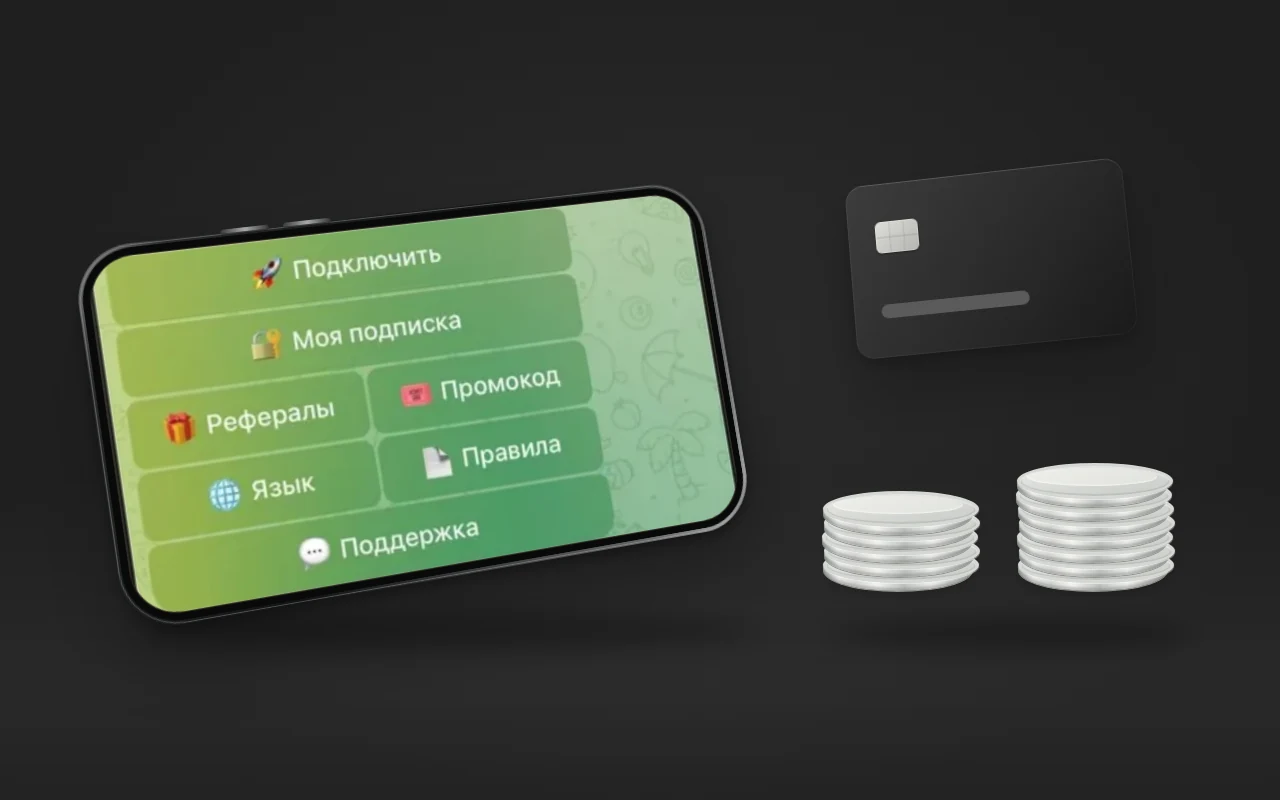
VPN Bot in Telegram: What It Should Do in a Service
How to build a VPN bot in Telegram for selling subscriptions: trial access, key delivery, autopayment, devices, referrals, support, panel integration.
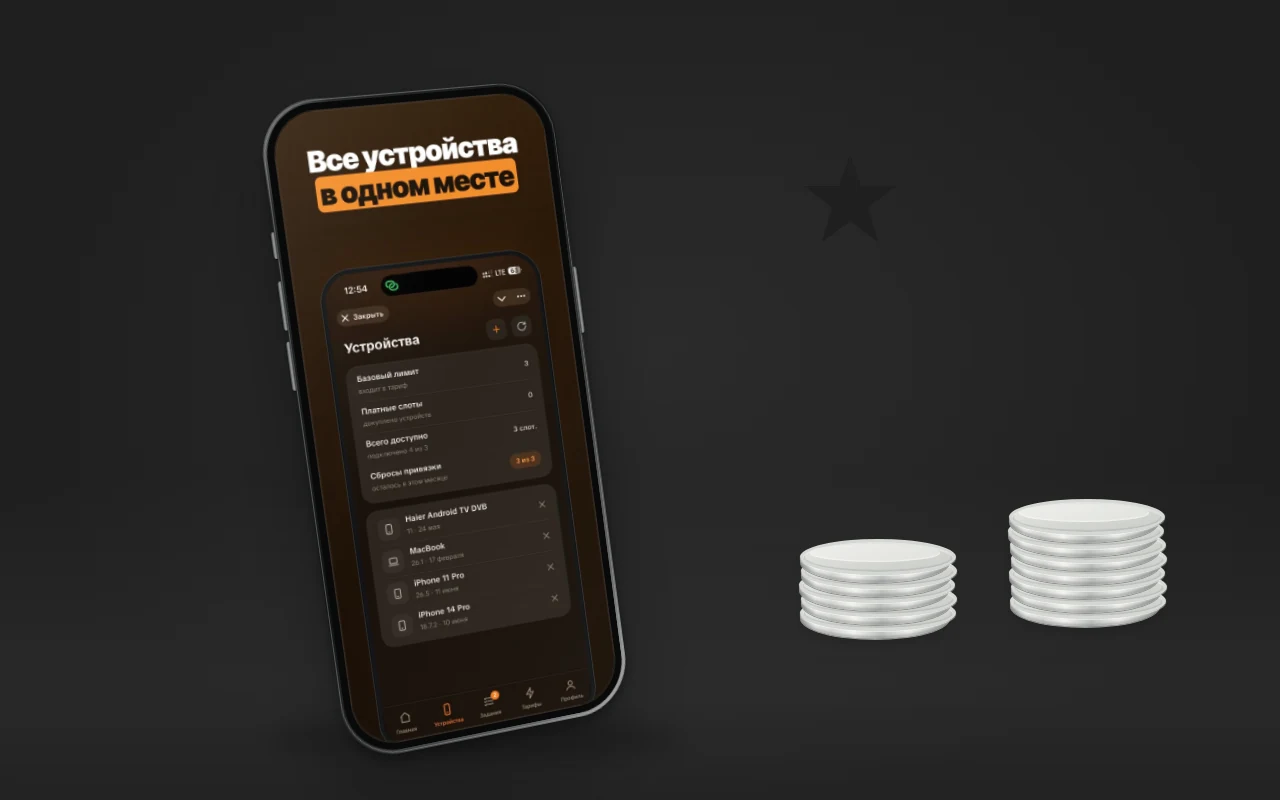
Telegram Mini App: What It Is and How to Build One
A Telegram Mini App is a web app inside Telegram: how it differs from a bot and a site, what it can do (Stars, sign-in) and when a business needs one.
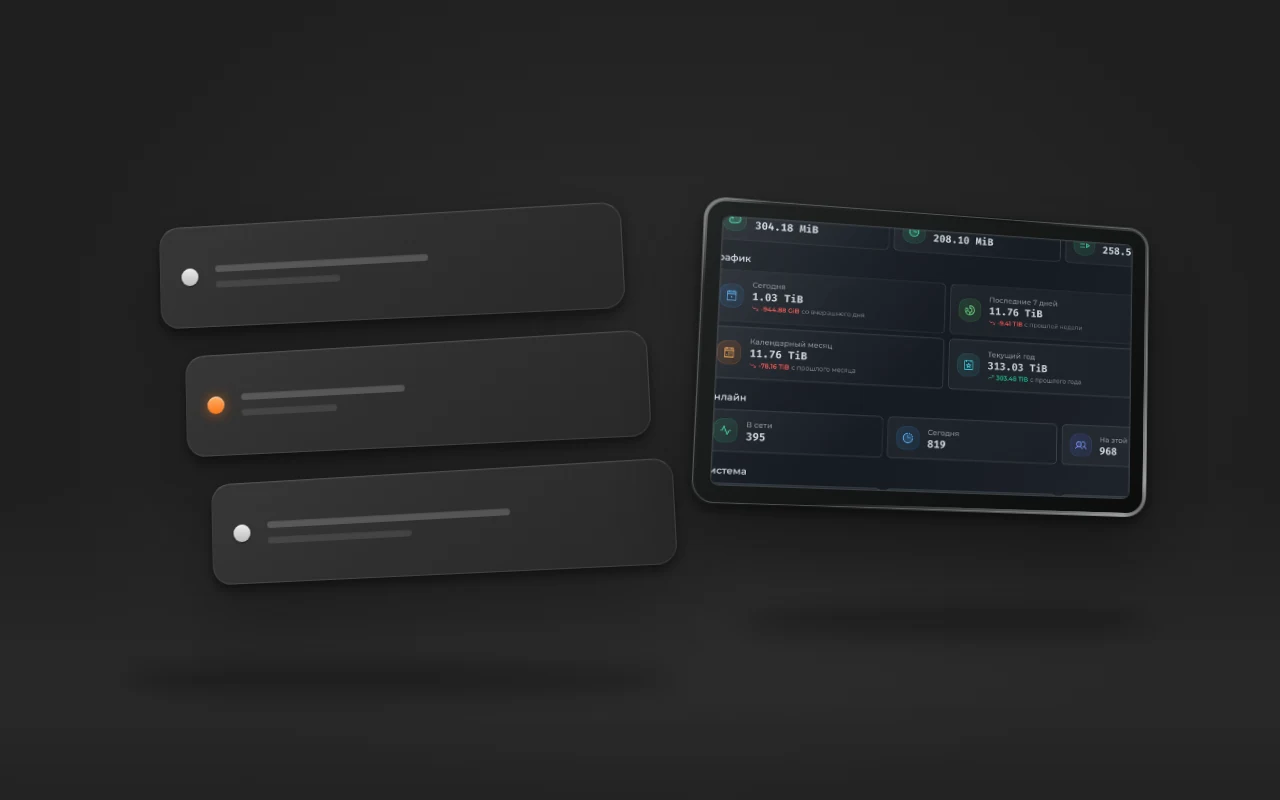
VPN Server Hardware: Which VPS to Pick and How Much It Can Handle
What kind of VPS a subscription-based VPN service needs: bandwidth, traffic limits, CPU. Real numbers from a live service: 79 TiB per month, 395 users online, and what hits its limit first.