VLESS Reality for a VPN Service: TCP with Vision, XHTTP, or gRPC
VLESS Reality is what most subscription services run on today, and what hides behind the “PRO setup for Russia” line in our calculator. It gets picked in 53% of calculations, and nearly everyone asks the same thing: how TCP differs from XHTTP, and which one to deploy. Below are four transports in a single table, along with Xray’s own position, and the answer to why a service built to last keeps its primary and backup servers on different transports.
The short answer
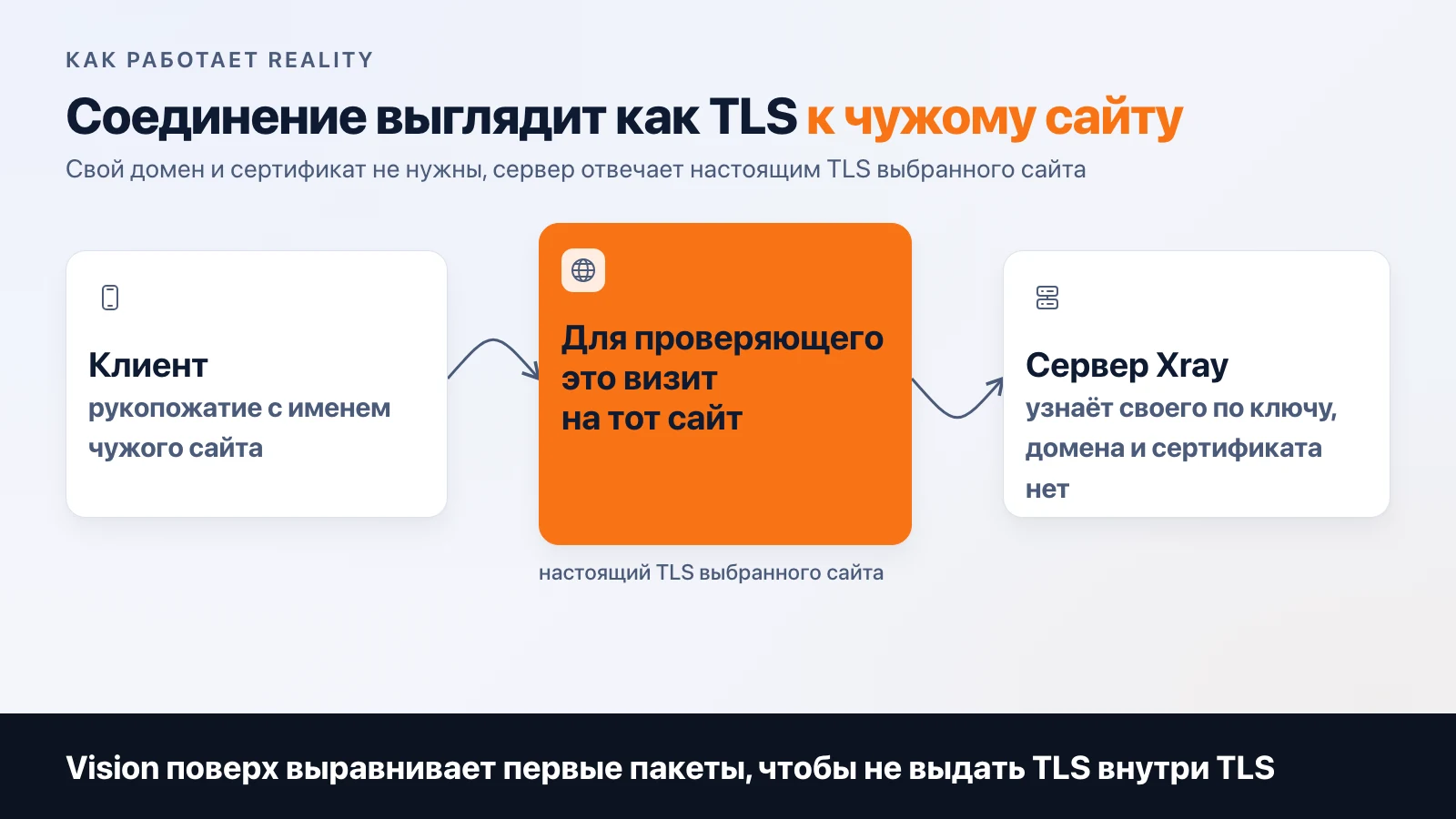
Reality replaces TLS: the connection looks like ordinary HTTPS to someone else’s site, and you don’t need your own domain or certificate. Vision evens out the first packets so the second TLS inside can’t be detected. The transport for a direct server is TCP with Vision; for working through a CDN, it’s XHTTP. Xray itself advises replacing gRPC with XHTTP. A service’s primary and backup servers should sit on different transports, and that’s not overcaution.
What Reality is and why it needs someone else’s site
The classic setup: you buy a domain, get a certificate, set up TLS, and your server responds like a website. The problem is that the server is yours, with your certificate, and it has a fingerprint.
Reality removes that step. The project README says as much: the protocol is “intended to replace the use of TLS” and “can point to other people's websites,” and there’s no domain to buy. The client starts a TLS handshake with another site’s name, the Xray server answers with that site’s real TLS, recognizes its own client by the key, and from then on talks to it. To an observer in the middle, this connection is “undistinguishable with the specified SNI” — indistinguishable from a visit to that site.
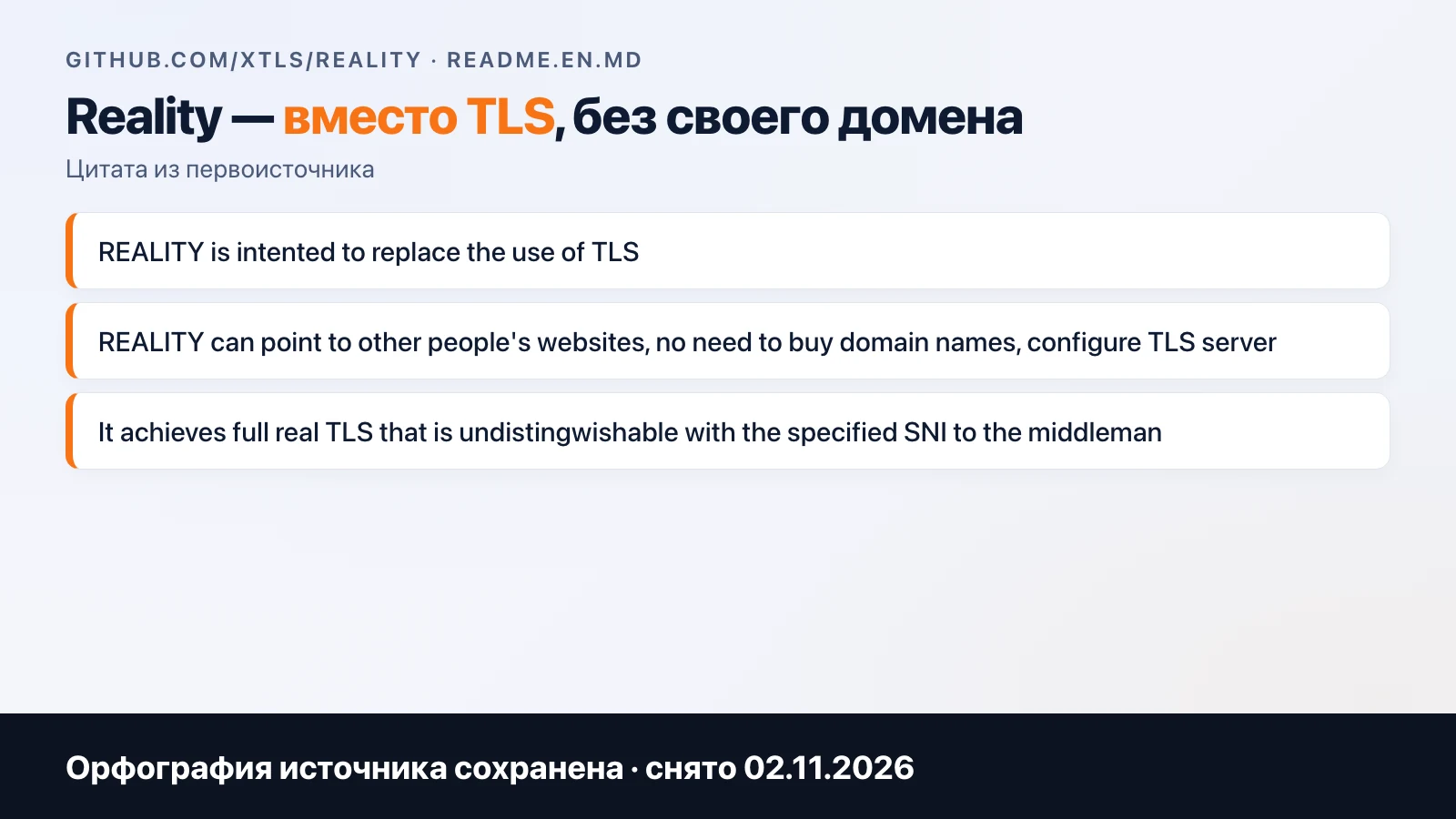
The REALITY project README, captured November 2, 2026. The server is a fork of the tls package from Go.
What this gives a service owner: a node comes up without a domain, no certificate expires, and moving to another server means nothing needs to be reissued. What it doesn’t give you: Reality doesn’t work through a CDN, because the CDN has to see your certificate and there isn’t one.
Vision: why even out the first packets
Reality covers the outer layer. User traffic still flows inside, and when the user opens a site over HTTPS, you get TLS inside TLS. Xray’s author explains in the Vision discussion that data gets encrypted twice, each layer adds a header, and the lengths of the first handshake packets take on a statistical shape that gives such a connection away.
Vision (flow: xtls-rprx-vision) pads short handshake packets to a length between 900 and 1400 bytes, and after the first inner packets it stops touching the data and simply copies it. Hence the low load: only the beginning is encrypted. Vision doesn’t touch packet timing, and the author says so directly.
The practical takeaway: Vision is enabled only on TCP, and only with Reality or TLS. XHTTP doesn’t need it — the mechanics there are different.
Transports in one table
| Transport | Through CDN | Load on the node | Xray’s position (November 2, 2026) | What it’s for |
|---|---|---|---|---|
| TCP + Reality + Vision | no | lowest | the primary path for a direct server | direct server, no CDN |
| XHTTP + Reality or TLS | yes, in the TLS variant | higher than TCP, depends on the mode | recommended instead of gRPC and WebSocket | CDN and networks where TCP won’t get through |
| gRPC + TLS | through an HTTP/2 proxy | medium | “recommended to switch to XHTTP,” risk of active probing | legacy setups |
| WebSocket + TLS | yes | medium | Xray advises XHTTP instead | legacy setups |
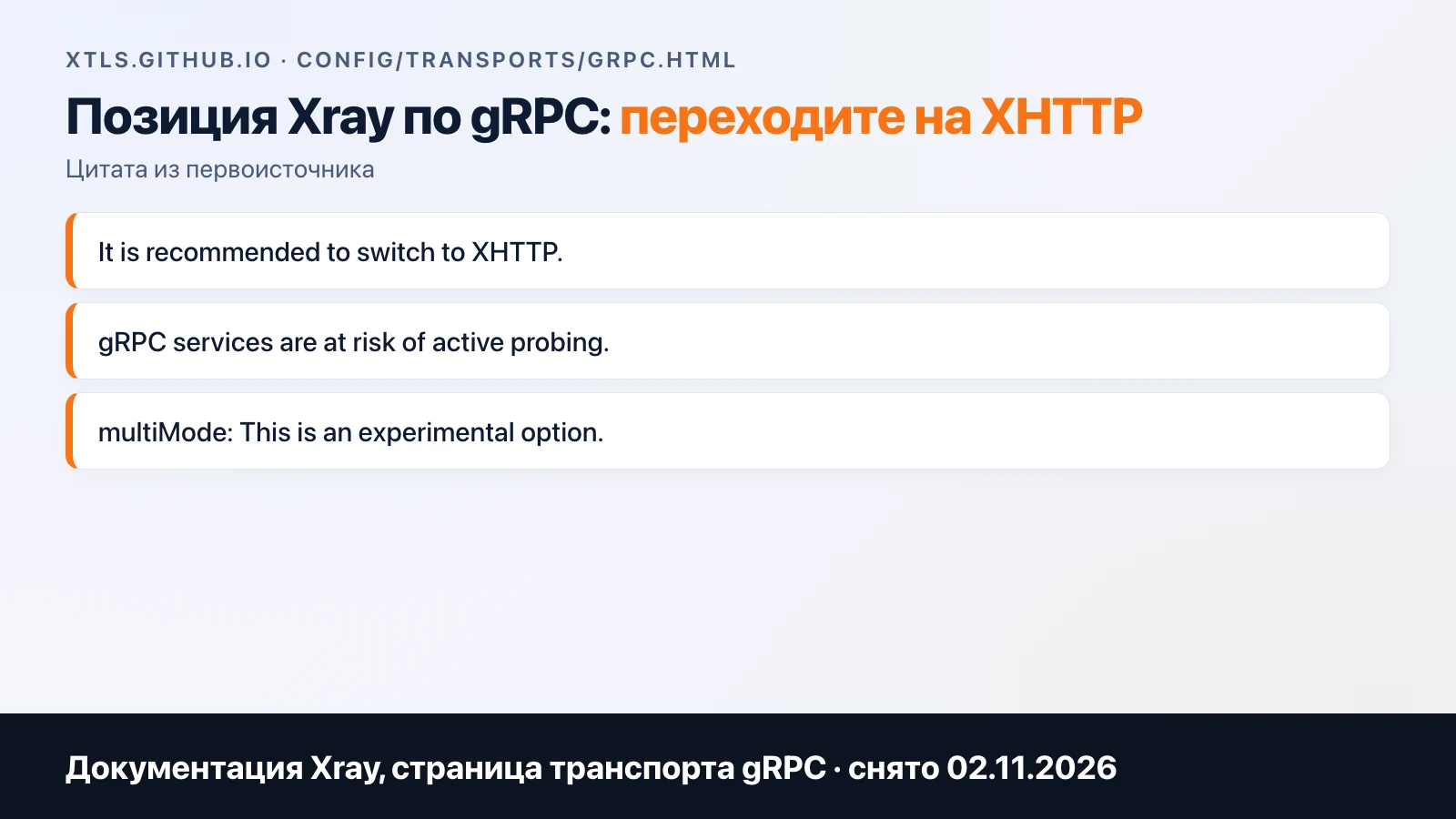
The gRPC page in the Xray documentation. The phrase “It is recommended to switch to XHTTP” appears there in plain text, and multiMode is marked experimental.
The table shows why the choice in practice comes down to two rows. A direct server is TCP with Vision — light and fast. Anything that has to go through a CDN or nonstandard networks is XHTTP.
XHTTP: three modes and CDN
XHTTP appeared at the end of 2024 as a replacement for SplitHTTP and, in the author’s words, brought “genuine separation of up and down streams.” There are three modes:
packet-up— upload in separate requests, download as a stream. The most compatible: if a CDN or reverse proxy cuts off the others, this is the one you enable.stream-up— both upload and download stream over HTTP/2. According to the author, this mode replaced the old gRPC transport when working through a CDN.stream-one— a single POST, and the response to it is the return stream. The default mode when the outer layer is Reality.
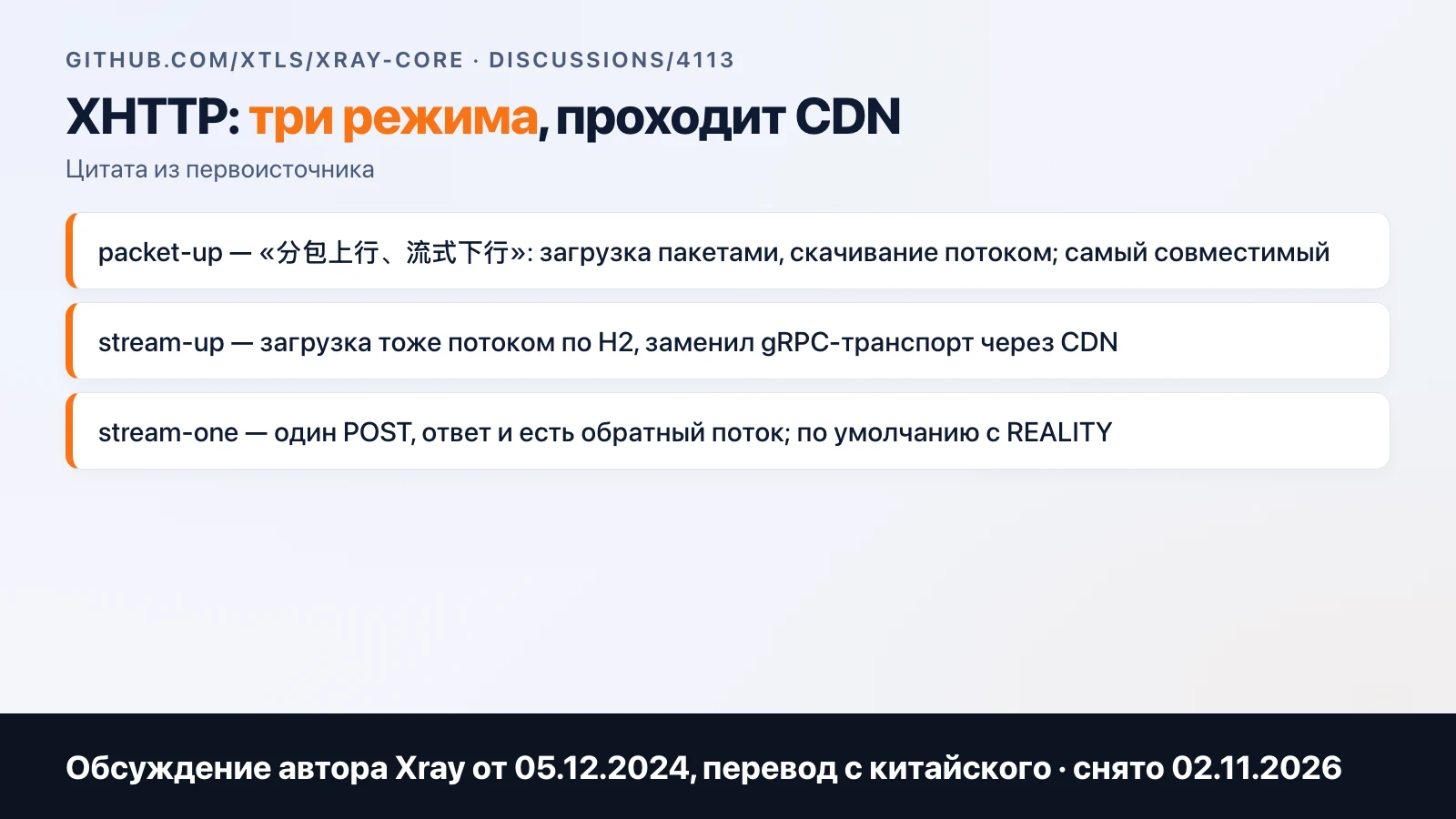
Discussion #4113 in the Xray-core repository, where the author described XHTTP and its modes.
Two caveats from the same discussion worth knowing before you configure anything. Cloudflare closes downstream HTTP with no data after 100 seconds, and you need to factor that into your parameters. And if it won’t connect through the CDN, the author advises enabling gRPC support in the CDN panel or switching to packet-up.
Why your primary and backup servers should run on different transports
Open the server list of any service that's been running for more than a year and look at the lines under the names: you'll almost always see both TCP and xhttp. That's not a sloppy config, it's insurance.
If one transport stops getting through on a given network, the other is most likely still alive, and all the user has to do is switch servers. A single server on a single transport is a bet that nothing will change — and in carrier networks, a lot changes fast. A backup on the same transport as the primary is no backup at all: it goes down the same minute.
Nobody publishes exactly what runs on which nodes for a given service. That's the part of the work that makes a service resilient, and there's no reason to put it out in public.
Why a config from the documentation holds up on Wi-Fi and fails on mobile
The classic support ticket for a young service: “works at home, doesn't work outside.” A config from the Xray wiki or from the panel is built for a network where nobody interferes between the client and the server. Home Wi-Fi is usually that kind of network. Carriers filter differently: the same connection gets through on one, gets killed after a minute on another, and never comes up at all on a third.
So testing on your own phone at home proves nothing. You need to test on several carriers, outdoors, at different times of day. And what you end up with rarely matches the config from the docs: different transports on different nodes, different parameters, different routes for some services. In the calculator, that's the “PRO setup for Russia” line, separate from the basic panel setup, and now it's clear why: the basic setup is the config from the docs, while PRO is what makes it work in the places your subscribers actually live.
Release v26.10.31: what to update right now
The reality of running a service: Xray-core ships updates often, and sometimes they aren't optional. On October 31, 2026, Xray-core v26.10.31 came out, and it's an emergency release: a vulnerability was found in the Linux kernel through which an IPv4 MPTCP listener yields remote root, so MPTCP in Xray is now off by default. The previous version, v26.10.29, has been withdrawn, and the author asks everyone to update as soon as possible.
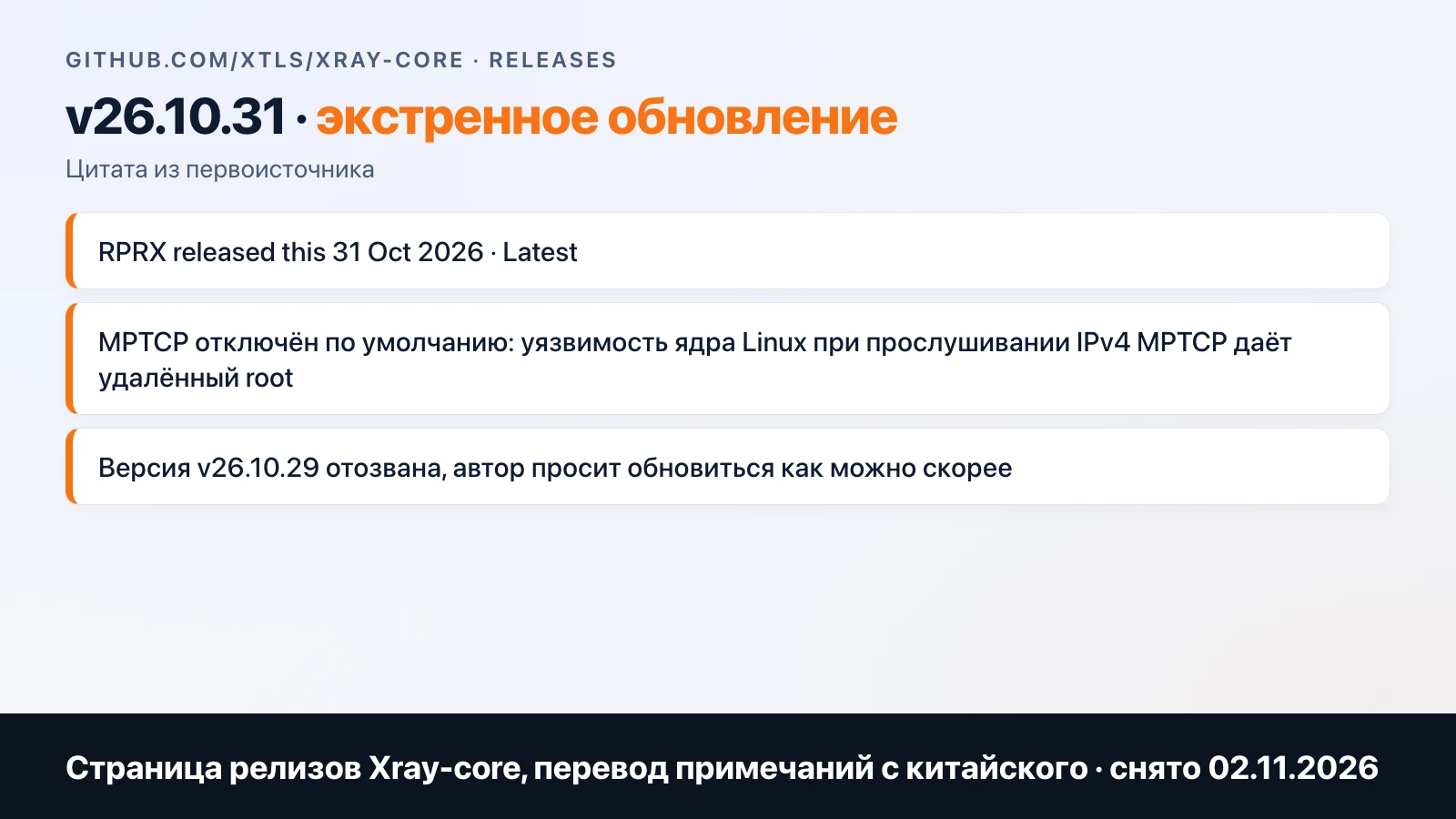
If you installed your panel from a guide that's six months old and haven't updated the core since, that's reason enough to check your version today. All three panels from the article on 3x-ui, Marzban and Remnawave run on Xray-core and update it separately from their own releases.
FAQ
Reality or TLS with your own domain? Reality needs no domain or certificate and shows the inspector the real TLS of someone else's site. TLS with your own domain is needed where traffic goes through a CDN.
How is Vision different from Reality? Reality is a layer in place of TLS, and Vision is a flow mode inside VLESS that evens out the lengths of the first packets. They work together.
Is gRPC still needed? The Xray docs recommend switching to XHTTP. gRPC sticks around for older setups.
Which transport works on mobile networks in Russia? Any transport from the docs works on Wi-Fi and may not work on a carrier. That's exactly what a Russia-specific setup is.
Do the panels support Reality? 3x-ui, Marzban and Remnawave run on Xray-core, and all of them have Reality and XHTTP.
Transport tuning for carriers in the calculator is called “PRO setup for Russia.” There you can see what it adds up to next to the panel, the server, and the apps.
Frequently asked
Reality or TLS with your own domain?
Reality needs no domain or certificate and presents the real TLS of someone else's site to whoever is inspecting the connection. TLS with your own domain is required where traffic goes through a CDN.
How does Vision differ from Reality?
Reality is a layer that replaces TLS; Vision is a flow mode inside VLESS that evens out the lengths of the first packets so TLS-inside-TLS doesn't give itself away. They work together.
Is gRPC in Xray still needed?
The Xray documentation explicitly recommends switching to XHTTP. gRPC remains for compatibility with older configurations.
Which transport works on mobile networks in Russia?
Any transport from the documentation works on home Wi-Fi and may fail on a carrier's network: their filtering works differently. That's exactly what tuning for Russia means, and you can't copy it from a wiki.
Do 3x-ui, Marzban, and Remnawave support Reality?
All three panels run on Xray-core, and Reality and XHTTP are available in each one.
Related articles
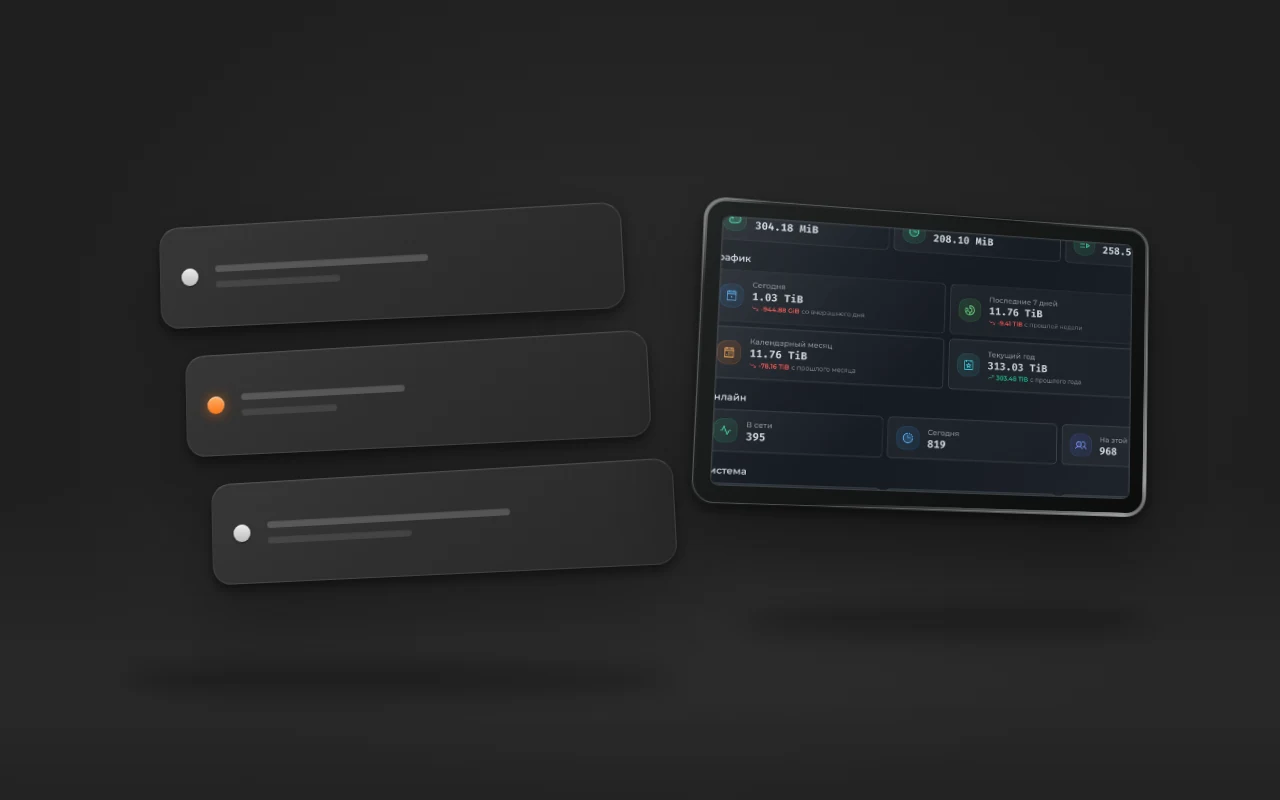
VPN Server Hardware: Which VPS to Pick and How Much It Can Handle
What kind of VPS a subscription-based VPN service needs: bandwidth, traffic limits, CPU. Real numbers from a live service: 79 TiB per month, 395 users online, and what hits its limit first.
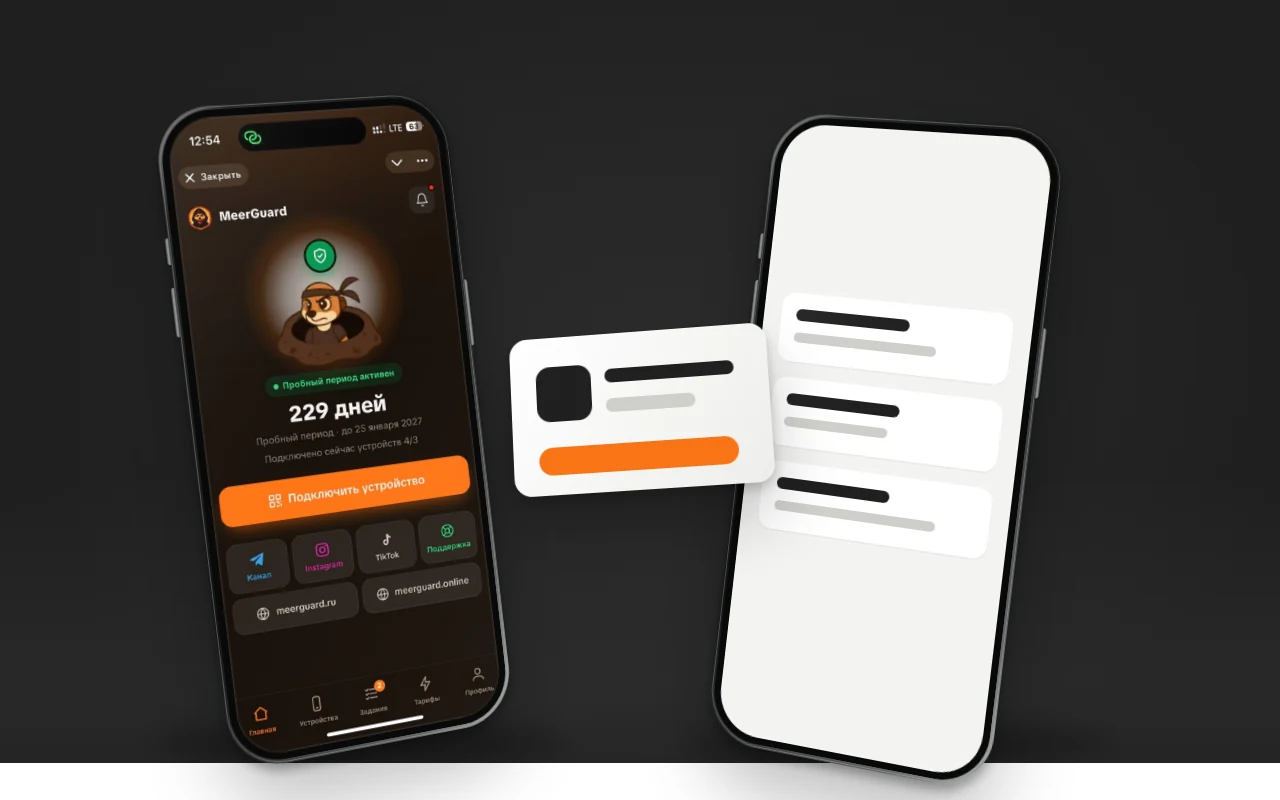
Your Own App or Happ: What to Give VPN Service Customers
Happ is free and installs in a minute, but it keeps getting pulled from the Russian App Store. Your own app can take months to pass review. What to give subscribers, and when.
Taking payments in a Telegram bot: Stars, YooKassa, SBP, or crypto
How to take subscription payments in a Telegram bot: Telegram's rule on Stars, YooKassa and Tribute fees, and crypto. How people actually pay in our bot.